Start with the attachment points
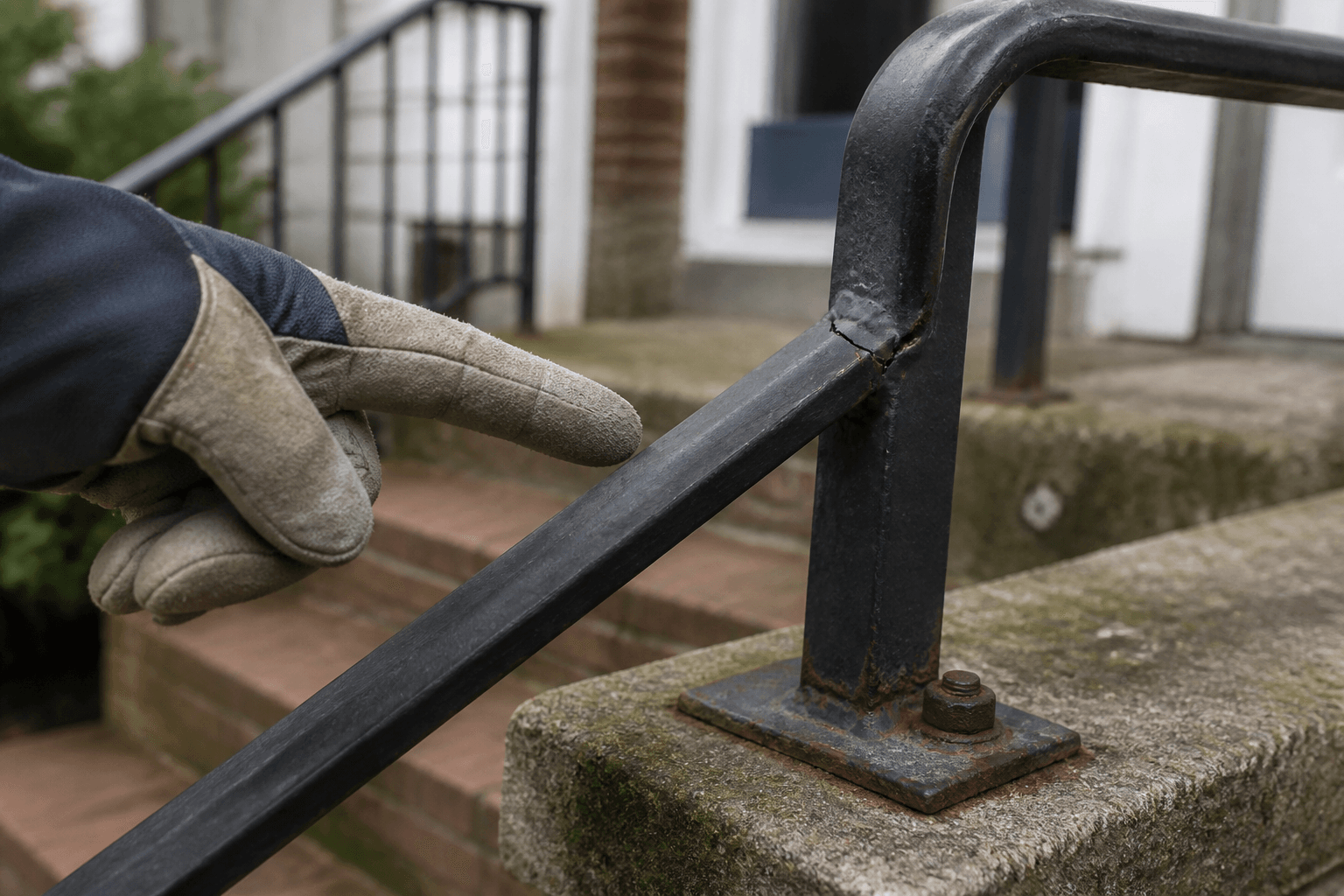
A railing can feel loose even when the visible metal looks sound. Movement may come from a failed weld, a damaged base plate, or the way the railing connects to the steps or structure. The repair needs to address the real point of failure, not just the most visible symptom.
Look at how widespread the damage is
A localized crack or broken section may be a good repair candidate. Damage across multiple posts, rails, or connections can change the equation. Heavy material loss can also leave too little sound metal for a dependable welded repair.
- Check for movement at every post
- Photograph rusted or separated areas up close
- Take one wide photo showing the entire railing
- Do not rely on a damaged railing for support
Consider fit and future use
Older railings sometimes fit a unique set of steps better than a stock replacement would. A custom repair or new made-to-fit railing can preserve that fit. If the layout no longer suits how the entrance is used, replacement may offer a better long-term result.
Get an experienced assessment
Photos are helpful for an initial conversation, but a complete recommendation may require seeing the railing and its connections. Describe where it moves, when the damage appeared, and whether anyone currently relies on it for support.
If a railing is loose, cracked, or separating from its supports, stop relying on it and request an assessment. Castro Welding offers free estimates within the New Bedford service area.
Learn about Castro Welding's metal repair and mobile welding service